Original vs compatible toner: what businesses should know
Original or compatible toner? Compare print quality, page yield, cost per page and printer warranties, and learn how to spot counterfeit cartridges in Zambia.
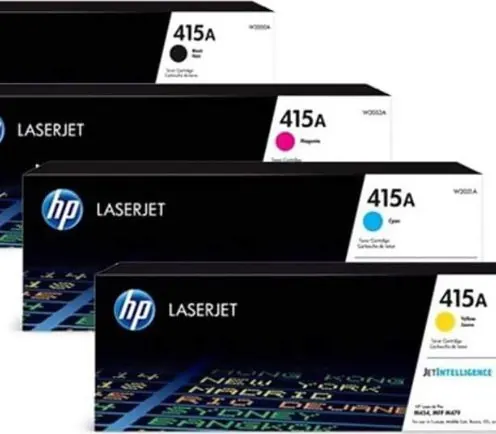
Toner is one of the biggest running costs of any office laser printer or photocopier. When a cartridge runs out, you usually have a choice: the original toner made by your printer's manufacturer, or a cheaper compatible cartridge from another company. Somewhere in the market there are also counterfeits dressed up to look like the real thing.
The cheapest box on the shelf is not always the cheapest way to print. This guide compares original vs compatible toner on the points that matter to a business in Zambia: print quality, page yield, cost per page and your printer's warranty. It also explains how to spot counterfeit cartridges before they reach your office.
Original, compatible, remanufactured and counterfeit toner
Four kinds of cartridge are sold for the same printers. They are not the same product.
Original (OEM) toner
Original toner is made by the printer's manufacturer, such as Original HP or Canon Genuine toner. The cartridge, the toner powder and the printer are designed and tested together. For most laser printer cartridges, the manufacturer publishes a page yield measured under international standards, so you know roughly how many pages to expect.
Compatible toner
Compatible cartridges are new cartridges made by a third-party company to fit a particular printer. Quality varies a lot between manufacturers: some are good, others print faint or streaky pages or run out early. The page yield on the box may not have been measured the same way as the original's.
Remanufactured toner
Remanufactured cartridges are used original cartridges that have been cleaned, refilled and had worn parts replaced. As with compatibles, the result depends on who did the work and how carefully.
Counterfeit toner
Counterfeit cartridges are the real risk. They are made to look like original HP or Canon products, often with copied boxes and labels, and sold at original-toner prices or slightly below. You pay for an original and receive an unknown product.
Print quality and reliability
Print quality is where the original vs compatible toner difference is easiest to see. For documents that leave your office, such as quotations, tenders, invoices and reports, print quality is part of how customers see your business.
Original toner is formulated for the printer it was made for. Toner particle size, how the toner fuses to paper and how the cartridge feeds the printer are all matched to that machine. The practical result is consistent output from the first page to the last: sharp text, even greys and accurate colour.
With compatible and remanufactured toner, results depend on the brand and even on the batch. Common complaints include:
- faded or patchy pages, especially as the cartridge empties
- streaks, smudges or loose toner on the page
- colours that do not match from one cartridge to the next
- the printer reporting the cartridge as empty, or not recognising it at all
A poor cartridge can also spill toner inside the printer. That means cleaning, possibly a technician's visit, and a printer that is out of action while you wait.
Cost per page: the number that matters
The price of a cartridge tells you very little on its own. What matters is the cost per page:
Cost per page = cartridge price ÷ number of pages it prints
Here is a simple illustration (round numbers, not real prices):
- Cartridge A costs 1,000 and prints 2,000 pages: 0.50 per page
- Cartridge B costs 600 and prints 1,000 pages: 0.60 per page
Cartridge B is 40% cheaper to buy, but every page costs more. If B also produces pages that have to be reprinted, the gap grows.
How to compare page yields fairly
For laser printers, page yields are measured under two international standards: ISO/IEC 19752 for black-and-white toner and ISO/IEC 19798 for colour toner. Manufacturers such as HP state these yields for their cartridges. When you compare cartridges, ask whether the yield on a compatible box was measured under the same standard. If it was not, the two numbers are not comparable.
Copier toners, such as the Canon C-EXV range, are often rated at a stated page coverage instead. The same rule applies: compare like with like.
The hidden costs
When you work out what a cartridge really costs, include:
- Reprints and the paper they use
- Staff time spent clearing jams, shaking cartridges and reprinting
- Downtime when the printer is out of action
- Repairs if a cartridge leaks or damages the printer
For a busy office printing thousands of pages a month, these costs often outweigh the saving on the cartridge.
Printer warranties and cartridge chips
Many buyers worry that compatible toner will void their printer's warranty. The position is more specific than that.
HP's printer warranty statement says that using a non-HP or refilled cartridge does not, by itself, affect the printer's warranty. However, if a printer failure or damage is caused by that cartridge, HP charges its standard time and materials rate to repair it. In other words, the warranty still stands, but damage caused by the cartridge is not covered. Check the warranty terms for your own printer model, as manufacturers' wording differs.
Some HP printers also use a feature HP calls dynamic security. HP says these printers are designed to work only with cartridges that have an HP chip or HP circuitry. A compatible cartridge with a non-HP chip may be rejected by the printer. Remanufactured cartridges that reuse the original HP chip are not affected.
Modern HP LaserJet toners, such as the HP 415A and HP 212A, use HP's JetIntelligence technology, which includes features designed to help protect against counterfeit cartridges.
How to spot counterfeit toner
Counterfeits are made to pass a quick look, so check carefully when a new box arrives:
- Check the security label. Original HP toner boxes carry a holographic security label that changes when you tilt the box, and a QR code you can scan with your phone to check the product. HP explains what to look for on its anti-counterfeit page.
- Inspect the packaging. Look for blurred printing, spelling mistakes, poor-quality cardboard or a box that has been opened and resealed.
- Match the part number. The cartridge number and part number should match your printer. For example, HP 415A black is part number W2030A.
- Be wary of prices that look too good. A "new original" cartridge sold far below the usual price is a warning sign.
- Watch the first prints. Faint pages, smudging or printer warnings on a brand-new cartridge suggest it is not what the box says.
- Buy from a registered supplier. A supplier registered with PACRA and ZRA has a business name, an address and a track record to protect.
If you suspect a fake HP product, HP's anti-counterfeit page explains how to report it.
When compatible toner can make sense
Compatible toner is not always the wrong choice. It can be reasonable for an older printer that is out of warranty, for low-volume printing, or for internal drafts where appearance matters less. If you try it, test one cartridge first, keep a record of how many pages it actually prints, and work out the real cost per page before buying in quantity.
For printers that matter to your business, and for anything customers will see, original toner is the safer choice.
Choosing the right toner for your printer
Start with the exact model of your printer or copier. It is usually printed on the front or on a label at the back. Then match it to the cartridge:
- HP 415A (Black, Cyan, Magenta, Yellow) for the HP Color LaserJet Pro M454 and MFP M479
- HP 212A (Black, Cyan, Magenta, Yellow) for the HP LaserJet Enterprise M554, M555 and MFP M578
- HP 650A black for the HP LaserJet Enterprise CP5525
- Canon C-EXV 59 black for the Canon imageRUNNER 2625, 2630 and 2645
- Canon C-EXV 60 black for the Canon imageRUNNER 2425
- Canon Cartridge 054 for the Canon i-SENSYS LBP620C and MF640C series
Not sure which cartridge fits? Send us your printer model and we will tell you.
Frequently asked questions
Is original toner worth the extra cost?
For most businesses, yes. Original toner gives a published page yield, consistent print quality and no risk of the printer rejecting the cartridge. Once you compare cost per page and include reprints and downtime, the difference is often smaller than the shelf price suggests.
Will compatible toner damage my printer?
Not necessarily, but quality varies between brands. A poorly made cartridge can leak toner or wear parts inside the printer. With HP printers, repairs caused by a non-HP cartridge are charged at HP's standard rates rather than covered by the warranty.
Does compatible toner void my HP printer warranty?
HP's warranty statement says that using non-HP or refilled cartridges does not, by itself, affect the warranty. Damage that is caused by such a cartridge is not covered.
How can I tell if HP toner is genuine?
Check the holographic security label on the box, scan its QR code with your phone, and make sure the seals are intact. HP's anti-counterfeit page shows the current label design.
How many pages will a toner cartridge print?
It depends on the cartridge and on how much of each page is covered. For laser printer cartridges, manufacturers publish an ISO page yield, which is the fairest way to compare cartridges.
Get the right toner for your office
Choosing between original vs compatible toner comes down to cost per page, reliability and the risk you are willing to take with your printer. For most offices, original toner from a registered supplier is the most dependable choice.
Nosmas Imports & Suppliers supplies Original HP and Canon Genuine toner from Chester House on Cairo Road, Lusaka. Tell us your printer model and the quantities you need, and we will send you a quote: request a quote, browse all toners or call us on +260 211 233 482.
Let us know your needs.